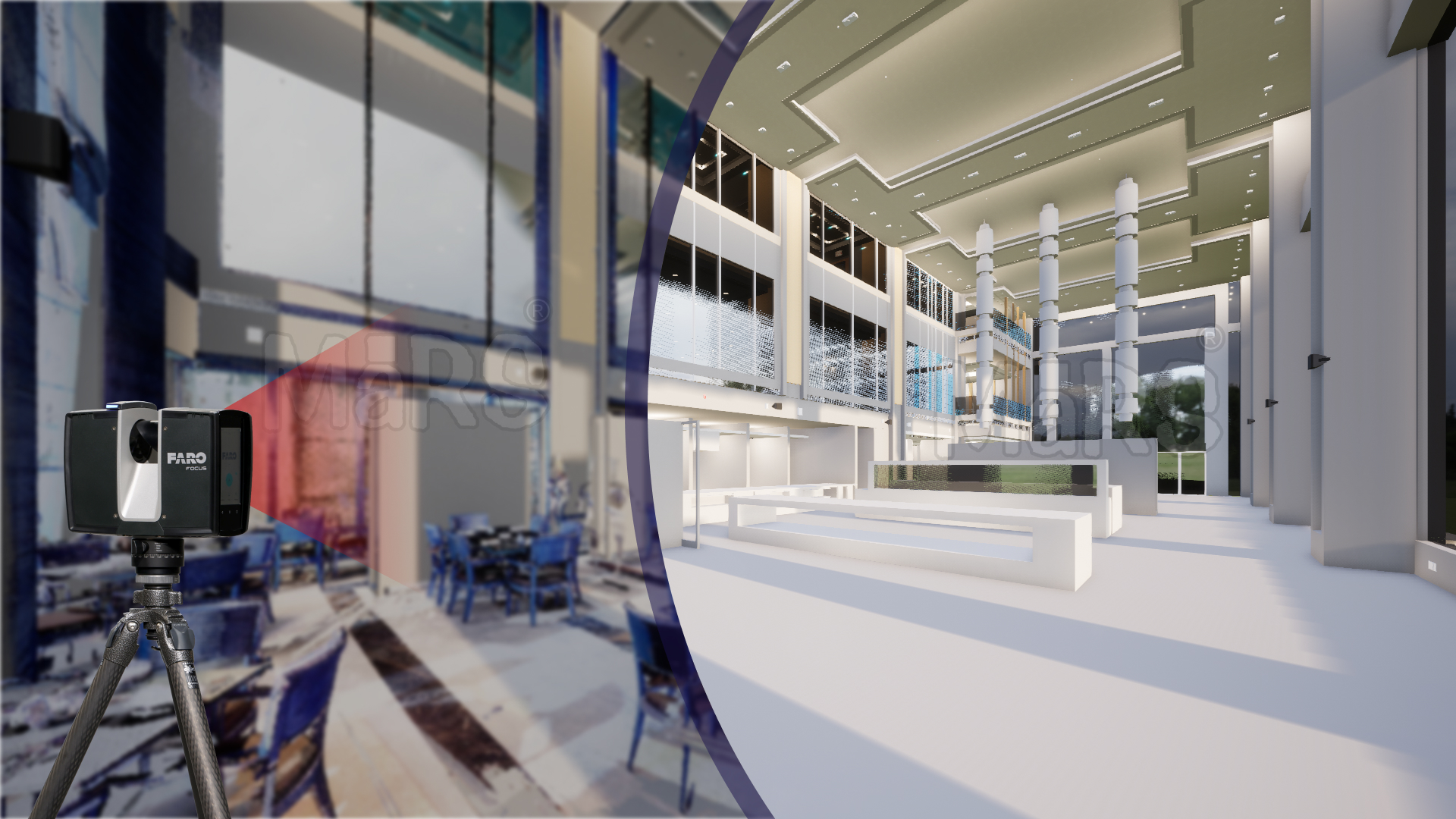
Modern construction projects benefit from tools that connect physical site progress with digital accuracy. FARO technology provides high-precision laser scanning that captures real-world conditions directly from the jobsite. Construction teams use this data to generate detailed models that reflect actual site geometry enabling more confident coordination between design, engineering, and installation teams.
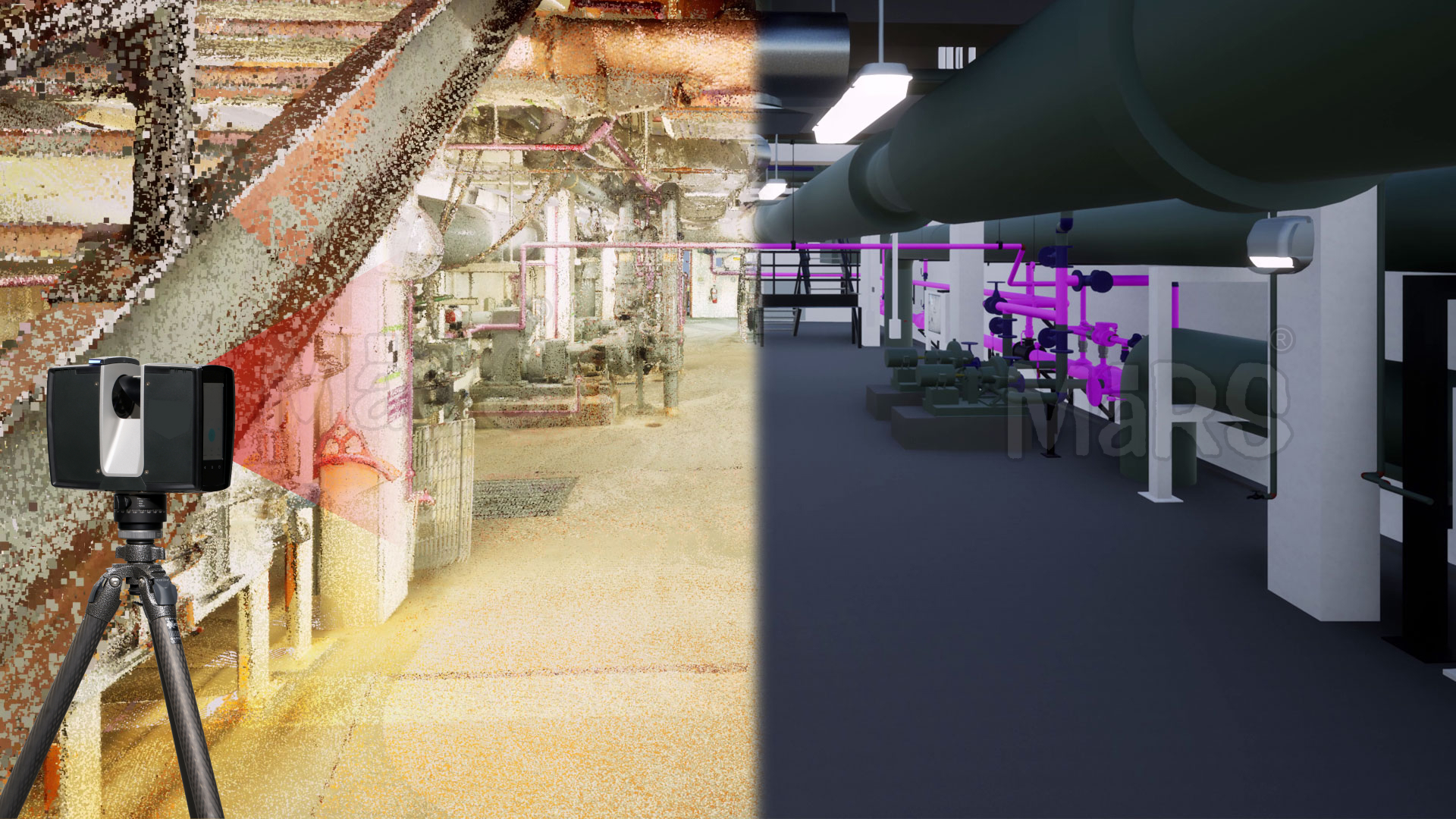
FARO’s strength lies in its ability to support field operations without slowing them down. Quick deployment, fast scanning, and clean point cloud output help construction professionals document MEP routing, concrete placements, and framing alignments with clarity. Whether supporting verification during foundation work or guiding prefabrication layout, FARO scan to BIM tools align digital workflows with live project activities.
Project stakeholders gain greater control over progress when field conditions are continuously reflected in the BIM model. Using FARO, construction managers, BIM coordinators, and subcontractors maintain tighter alignment between model intent and site execution. This connection leads to fewer discrepancies, more accurate installations, and smoother handoffs across project phases.
FARO in the Construction Environment
Site teams use FARO scanners to document installed elements like MEP systems, concrete pours, steel members, and partition layouts with millimeter-level accuracy. The scanners are deployed by field engineers or quality teams to verify construction progress at critical stages such as post-rebar installation, pre-slab pour, or post-service rough-in. FARO’s portability allows it to move across active job zones, enabling point cloud capture in real-time without halting site activity. Captured scans are typically registered and reviewed within hours, feeding into BIM workflows for immediate model updates.
FARO’s compatibility with construction site operations supports a range of field-driven tasks. Subcontractors rely on it to confirm hanger positions or duct alignment before ceiling closures. Structural teams use it to validate anchor bolt layouts and embedded components. For general contractors, it becomes a verification tool to ensure that installed work matches approved shop drawings. FARO fits directly into the daily routine of construction execution, bridging what’s built, what’s planned, and what’s next.
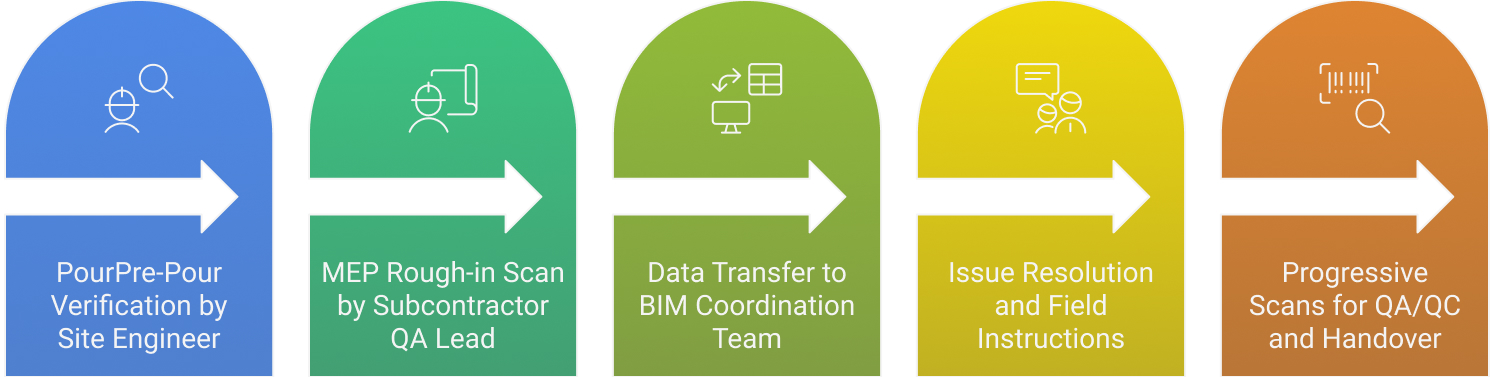
FARO’s Role in Real-World Construction Workflows
Pre-Pour Verification by Site Engineer
Before concrete pour, the site team uses FARO to scan rebar placement, sleeve positions, and embedded items to ensure alignment with structural drawings.
MEP Rough-in Scan by Subcontractor QA Lead
Post-installation of ductwork, pipes, and cable trays, the MEP subcontractor scans the service zone to validate clearance, bracket spacing, and elevation tolerances.
Data Transfer to BIM Coordination Team
Point cloud files are handed over to the BIM team for integration. Using Revit or Navisworks, they overlay the scan on coordination models to detect any field-to-model deviations.
Issue Resolution and Field Instructions
Clash areas or misalignments are marked in the model and relayed back to site teams as actionable markups or layout revisions, keeping installation on track.
Progressive Scans for QA/QC and Handover
At project milestones, FARO is used to scan completed zones such as riser shafts or ceiling plenums, ensuring all installations are recorded for final BIM handover or facility use.
Use Cases in AEC Construction
On mid-rise commercial projects, general contractors deploy FARO scanners during slab stage to validate sleeve locations, core wall offsets, and PT cable zones before pour approvals. This scan data is not only used for immediate dimensional verification but also sent to the structural BIM team to overlay rebar shop drawings with actual site placement. For retrofit projects, such as converting a warehouse into office space, FARO enables capture of existing MEP penetrations, ceiling elevations, and column spacing supporting accurate model development where no reliable drawings exist.
MEP subcontractors use FARO on active sites to confirm hanger rod drops, duct clearance around beam flanges, and pipe slope consistency, especially before ceiling closures or shaft sealing. On hospital or cleanroom projects, scan data helps maintain spatial tolerances for medical gas lines, air handling units, and equipment clearances. The collected point cloud acts as a living reference for installation inspections, deviation tracking, and final system certification all integrated into the project’s BIM environment for turnover.
FARO Software Advantages for Site-to-Model Conversion
- FARO SCENE enables onsite registration of scans within minutes, allowing site engineers to confirm embed locations, slab edges, and lift cores before pour approvals.
- Mechanical BIM teams use FARO’s As-Built Modeler to extract actual pipe centerlines and convert them into Revit-native geometry, ideal for validating chilled water or fire protection layouts.
- FARO data is used to simulate the placement of pre-manufactured duct racks or riser modules by comparing scanned voids with fabrication dimensions in Navisworks.
- Structural teams overlay scan data on BIM models to verify steel anchor bolt alignment or floor penetration accuracy before steel erection or MEP rough-in begins.
- Site coordinators generate issue snapshots directly from FARO SCENE to support RFIs; complete with dimensions and positional context for faster consultant responses.
- QA teams use deviation mapping to compare installed framing or floor flatness against model tolerances, supporting handover and compliance records.

Site Productivity Gains
Construction managers and field coordinators rely on FARO to validate site readiness before releasing prefabricated duct assemblies, riser modules, or electrical trays for installation. By scanning completed areas such as slab pours, pipe layouts, or structural connections, teams confirm field accuracy and match it to the coordination model for progress tracking and inspection preparation. QA/QC leads use scan data to verify dimensional compliance before moving forward with drywall closures or service insulation. This scanning-based workflow helps maintain trade sequencing, reduces downtime between crews, and supports faster turnover of completed zones. FARO plays an active role in keeping daily site operations moving with fewer disruptions and greater alignment across teams.
Best Practices in Construction Scan to BIM with FARO
On active job sites, scanning is most effective when tied to construction hold points such as pre-pour for core walls, post-installation of MEP in shafts, or before ceiling grid layout. FARO scans are scheduled directly into the lookahead program by site engineers, ensuring field conditions are captured before the next trade mobilizes. Scanning responsibilities are assigned to the QA/QC or layout team, who coordinate scanner setup based on control lines, slab cuts, or benchmark elevations. Consistent scanning positions and overlap across zones help maintain data clarity, in areas like riser shafts or congested corridors where visibility is limited.
BIM leads coordinate closely with field teams to flag priority zones such as equipment pads, high-density service areas, or prefabrication delivery points before modeling begins. Instead of modeling entire floors, teams focus only on scanned zones that affect immediate work. FARO scans may be used to verify VAV box hanger drops ahead of ceiling closure or to model actual steel tolerances before installing prefabricated wall frames. These targeted scans and selective modeling efforts reduce turnaround time while giving trades actionable data. Using FARO as part of weekly QA reviews or trade handoff protocols also adds accountability to installation accuracy and drives more reliable field execution.
Conclusion
FARO technology supports construction-driven BIM workflows through precise spatial validation, trade coordination, and installation alignment. When deployed at key control stages such as post-sleeve placement, embed verification, and post-rough-in scans. It provides high-resolution point cloud data that feeds directly into model updates and fabrication checks. Construction teams leverage FARO to validate slab tolerances, monitor system offsets, and track installation geometry against coordination models. Integrated with tools like Revit, Navisworks, and As-Built, FARO enables a model-based field management approach, improving control over dimensional accuracy, trade sequencing, and handover documentation on complex AEC projects.



Recent Comments