

AEC firms are rapidly reimagining how buildings are planned, constructed, and managed by embedding intelligence across the entire lifecycle. Digital transformation today means more than transitioning from paper to digital. It means enabling real-time visibility, data-driven coordination, and seamless continuity from concept through handover. One of the key enablers in this journey is the Digital Twin From Laser Scanning bringing physical site conditions into precise, data-rich models that support every stakeholder, from design to field teams.
Project delivery is evolving to meet new expectations around speed, transparency, and performance. Owners seek greater involvement during execution, field teams rely on coordinated models for accurate installation, and facility managers expect asset information to be ready on day one. Across these phases, digital twins offer a consistent, connected thread linking models, data, and field activity into one living environment.
By investing in digital twin maturity, AEC firms are aligning people, processes, and platforms toward smarter project outcomes. From early-stage planning through to real-time construction insights and operational readiness, this blog outlines a structured path for advancing digital capabilities viewing as a model, but as a dynamic tool that informs every step forward.
Market and Industry Drivers for Digital Twins in AEC
Construction firms are adopting digital twins as part of a broader shift toward connected project ecosystems.Clients now seek deeper visibility across design, construction, and facility management, often requesting model-based coordination and frequent site updates as part of project delivery. This evolution is creating new opportunities to embed intelligence into the construction phase where model data, reality capture, and sensor inputs converge to guide daily execution, streamline approvals, and enhance stakeholder engagement.
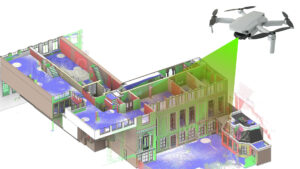
Digital twin adoption is also supported by advancements in technology that align directly with field operations. Integrated platforms now connect design models with drone scans, IoT sensors, and mobile field tools, making it possible to visualize progress and performance within a single environment. Industry initiatives focused on sustainability, carbon tracking, and smarter material use are further encouraging the use of digital twins to support environmental goals and long-term building value. These trends are creating a strong foundation for model maturity to grow within construction workflows.

Understanding Digital Twins vs. BIM in Construction
Construction teams rely heavily on BIM to coordinate trades, visualize structures, and manage design intent before building begins. However, as the project moves into execution, site conditions change daily, requiring more than static models. It extends BIM by integrating live jobsite data such as drone scans, sensor readings, equipment activity, and environmental metrics; directly into the model environment. This creates a continuously updated digital replica that reflects actual progress, supports rapid decision-making, and enables downstream use in operations. While BIM establishes the design foundation, Digital Twins keep the project environment continuously synchronized, creating a bridge between planning and performance.
Aspect-Based Comparison: BIM vs. Digital Twin in Construction
| Aspect | BIM Modeling | Digital Twin |
| Core Focus | Design intent, geometry, and coordination | Real-time representation of built conditions and performance |
| Model Behavior | Static or periodically updated | Continuously updated based on site data and system inputs |
| Site Integration | Used for layout, clash detection, and quantity takeoff | Linked with live scans, sensors, and field tools for active progress monitoring |
| Execution Support | Guides preconstruction planning and trade coordination | Supports immediate decisions, validations, and field status tracking. |
| Data Sources | Model elements created by architects/engineers | BIM + drones, laser scans, IoT sensors, mobile field reports |
| Handover Value | As-built model with design documentation | Asset-rich model with serial numbers, maintenance logs, performance data |
| Lifecycle Role | Ends after project completion | Extends through facility management, enabling predictive maintenance |
Digital Twin Maturity Model in AEC
Level 0 / Stage 1: Fragmented and Manual
Construction workflows rely on disconnected tools 2D drawings on-site, PDF markups, phone-based coordination. There’s no centralized model or structured data exchange. Field updates are tracked through emails or handwritten notes, with limited traceability or version control.
Level 1 / Stage 2: Model-Based Execution
BIM is introduced for coordination between architecture, structure, and MEP systems. Clash detection workshops improve constructability, and models support quantity takeoffs and site layout. However, updates stop at preconstruction field teams still rely on printed drawings and do not interact with live model data.
Level 2 / Stage 3: Field-Linked Models
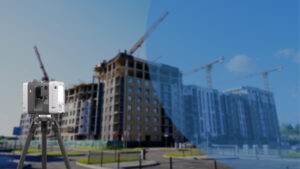
Reality capture becomes routine laser scans and drone photogrammetry are collected weekly to update the BIM model. These scans are overlaid to validate slab edges, embed locations, and MEP rough-ins before inspections. The project model starts reflecting the actual jobsite and supports visual verification.
Level 3 / Stage 4: Real-Time Construction Twins
IoT devices capture field conditions such as temperature, humidity, curing progress, crane activity, and fuel use. Data feeds directly into the model dashboard, offering project managers up-to-date visuals of task status, safety zones, and site logistics. Teams monitor plan-vs-actual timelines using 4D-linked views to stay ahead of sequencing delays.
Level 4 / Stage 5: Predictive + Prescriptive Execution
The digital twin becomes a smart decision-support environment. AI tools forecast material shortages, productivity patterns, or site congestion based on live sensor data and historical trends. Automated alerts are sent when work is out of sync or thresholds are exceeded, while asset metadata is enriched for handover into FM systems.
Roadmap: Scaling Digital Twin Maturity on Construction Sites
Align the Model with Construction Workflows
Start by ensuring the design and coordination models remain connected to daily site activities. When project teams, trades, and supervisors access the same model during installation, it creates consistency across planning, execution, and verification.
Implement Routine Reality Capture
Capture site conditions regularly using drones, laser scanning, or 360° cameras. Align these scans with the project model to confirm field progress, validate installations, and maintain visual records throughout the construction timeline.
Enable Field Teams with Direct Model Access
Equip field personnel with mobile access to live models using QR codes, tablets, or AR viewers. This supports real-time interaction with construction data, allowing crews to visualize installation details, review updated sequences, and contribute status updates directly from the jobsite.
Integrate Sensors to Enrich Model Intelligence
Use targeted IoT sensors to monitor key construction elements such as concrete curing, environmental conditions, or equipment activity. Live sensor data linked to model elements enhances visibility for project managers and supports faster, informed decisions during critical phases.
Prepare the Model for Operational Handover
During construction, embed asset details such as equipment IDs, maintenance requirements, and commissioning logs into the digital twin. This prepares the model for facilities teams and ensures a transition from construction to operations with structured, usable data.
Overcoming Key Challenges in AEC Digital Transformation
- Standardize site-to-model updates using scheduled scans and model checks.
- Align BIM and field tools through unified platforms for smoother coordination.
- Enable foremen and engineers to access live models directly from the jobsite.
- Use QR-tagged components to link physical elements with digital data.
- Promote hands-on digital training tailored to each construction role.
- Leverage open file formats and integrated tools for model continuity.
- Maintain secured access for models, documents, and sensor data on cloud systems.
Enabling Digital Adoption and Workforce Empowerment
Successful digital adoption in construction happens when technology aligns closely with how teams work on-site. Providing foremen, site engineers, and project managers with tools like mobile-accessible models, QR-scanned elements, and guided field apps enhances clarity and boosts real-time collaboration. When training is delivered in context—at the point of use and specific to each role; it strengthens confidence and increases daily use. Empowerment grows when field teams can interact with models directly, contribute feedback, and see their input reflected in live data. This approach turns digital workflows into a trusted extension of the construction process, supporting progress, precision, and shared accountability.
Measuring Impact and ROI
On active construction sites, the value of Digital Twins becomes clear through continuous validation, faster issue resolution, and smoother handovers. When field teams access federated models linked with weekly scans and sensor data. They can verify installations without delay, reducing rework and accelerating progress tracking. Model-driven coordination helps streamline material sequencing, installation planning, and site logistics. Turning data into a proactive tool that supports daily execution and field decision-making with precision.
At a strategic level, these digital gains contribute directly to improved handover readiness, stronger subcontractor alignment, and enhanced project closeout with complete asset data. Clients benefit from transparent workflows and structured maintenance data, while teams experience smoother punch-list management and schedule adherence. Measured in faster RFIs, fewer clashes, and better-informed site supervision. The ROI of Digital Twin maturity shows up in savings,and how confidently teams deliver complex builds.
Conclusion
Digital Twins are now central to how the AEC industry builds smarter, faster, and more collaboratively. From capturing live jobsite conditions to delivering models ready for operations, each stage of maturity adds measurable value across the construction lifecycle. By aligning field data, model coordination, and sensor intelligence, teams gain a powerful foundation for real-time decision-making and seamless project execution. The path forward is practical begin with focused pilots that connect your models to field reality, strengthen collaboration through shared digital environments, and scale confidently toward fully intelligent project delivery.


Recent Comments